
In New Braunfels and the surrounding Hill Country, things are moving fast. Growth is steady, neighborhoods are expanding, new businesses are rolling into town, and the population is rising at a remarkable clip. In fact, a new study by MoneyLion ranked New Braunfels as the second fastest-growing city in the US, with 31.7% growth over the last five years.
All of this might be great for the economy, but it does raise a key question: Where’s the water coming from?
This isn’t a theoretical concern. Much of the region has been dealing with extreme drought conditions. A year ago, Canyon Lake fell to historically low levels, sending ripples of concern through the community. The low levels had a significant impact on local businesses that rely on visitors coming to the area for recreation, but they also raised concerns about the water supply here in New Braunfels and in other nearby areas like San Marcos.
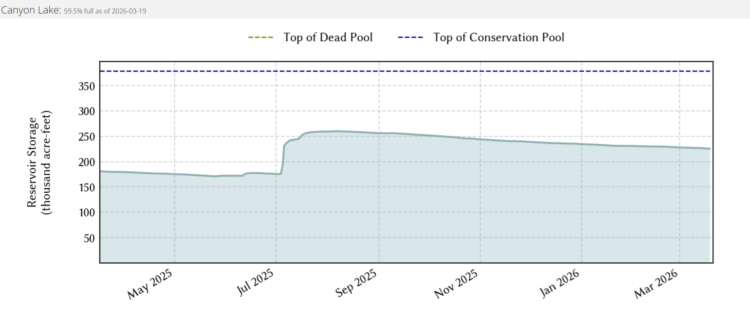
Last April, Canyon Lake was only about 46 % full, a 50-year low. It was a wakeup call that drought and demand can put a heavy strain on our supply.
Then, there was the dramatic flip. When last year’s deadly July storm tore through the Hill Country, it dumped huge volumes of water into the watershed. The lake jumped to approximately 68% capacity, offering a welcome relief during an otherwise terrible time.
But as summer faded and rainfall became patchy again throughout the fall and winter, the gains started slipping, and now, as of March 2026, the lake has dipped below 60% capacity again. It’s now just 59.5% full with the March 19th reporting.
For this city, which sits in one of Texas’ fastest-growing metro areas, water isn’t just a utility, it’s a foundational challenge. The more homes, businesses, and amenities we add, the more pressure there is on supply. The Hill Country’s geology, recharge zones, river flows, and reservoir levels don’t conveniently reset each year. They respond to rainfall, management, and usage — all of them together.
That’s one reason why New Braunfels has been under Stage 2 water-use restrictions for some time.
While Stage 2 is not the most severe, it signals that officials see less margin for error than in better years. Outdoor watering is limited, landscapes must be mindful, and households have to adapt.
The reservoir rebound was promising, but the recent slide reminds us that one big storm won’t solve everything. Without continued runoff, recharge, and broader watershed health, the short-term boost may not translate into long-term stability.
What You Can Do and What to Watch
- Conserve proactively: Whether it’s rain-harvesting systems, efficient indoor usage, or smart landscaping choices, individual action matters. Our partners at Aqua-man Water Conditioning specialize in designing and installing custom rainwater systems that fit the needs of your home or business. These systems capture and store hundreds of gallons every time it rains, giving you an extra source of clean water you can use for landscaping, household needs, or even as a full supply system with proper treatment. Rainwater harvesting puts you in control. One inch of rainfall on a 1,000-square-foot roof produces around 500 gallons of water. Imagine capturing that instead of letting it run off. By supplementing your usage, you can save money on your water bill, reduce pressure on the Edwards Aquifer, and help protect the springs and rivers that make New Braunfels special. Want to learn about rainwater collection systems for your home? Click here for more info.
- Keep an eye on lake levels: Canyon Lake’s capacity may look decent, but it’s still well below full and subject to rapid change.
- Know the water rules: Being under Stage 2 means specific restrictions — once-a-week sprinkler watering based on address digits, timing windows, and special rules for car washing and fountains.
- Consider recreation impacts: Low levels affect boat ramps, tourism, and local business — so being aware also helps you plan outings and support the economy.
- Watch growth and development: As new subdivisions go up, so does demand. Ensuring long-term water supply is part of how our community stays sustainable.
Final Thoughts
New Braunfels is a place people move to for the area’s lifestyle, rivers, lakes and growth. But that same growth brings responsibility for our water, our future, and our environment. Canyon Lake’s ups and downs this year are a clear reminder: the resources that support our community need active care.
Let’s enjoy the Hill Country, but let’s also recognize that conserving and planning now helps ensure we can continue to do so for years to come.